

Why Wood Choice Matters
We have the best instructors
The wood used in a cutting board affects durability, knife edge wear, maintenance, and daily usability. Some hardwoods strike the perfect balance between strength and knife friendliness, while others can feel overly hard or require more upkeep.
Choosing the right wood means your board will last longer and your knives will stay sharper.
✔ Knife friendliness varies by wood hardness
✔ Durability depends on grain structure
✔ Maintenance requirements differ between woods
What actually matters most when choosing a cutting board?
Glass, Marble & Stone — Avoid These4
These surfaces destroy knife edges.
OTRE Take:
These are serving boards, not cutting boards. Keep knives far away.
Extremely hard
No forgiveness
Chip or flatten blades quickly
How We Evaluate Cutting Board Woods
Different woods behave differently under repeated chopping, slicing, and washing. We look at durability, knife friendliness, and real kitchen usability to determine which woods work best for cutting boards.
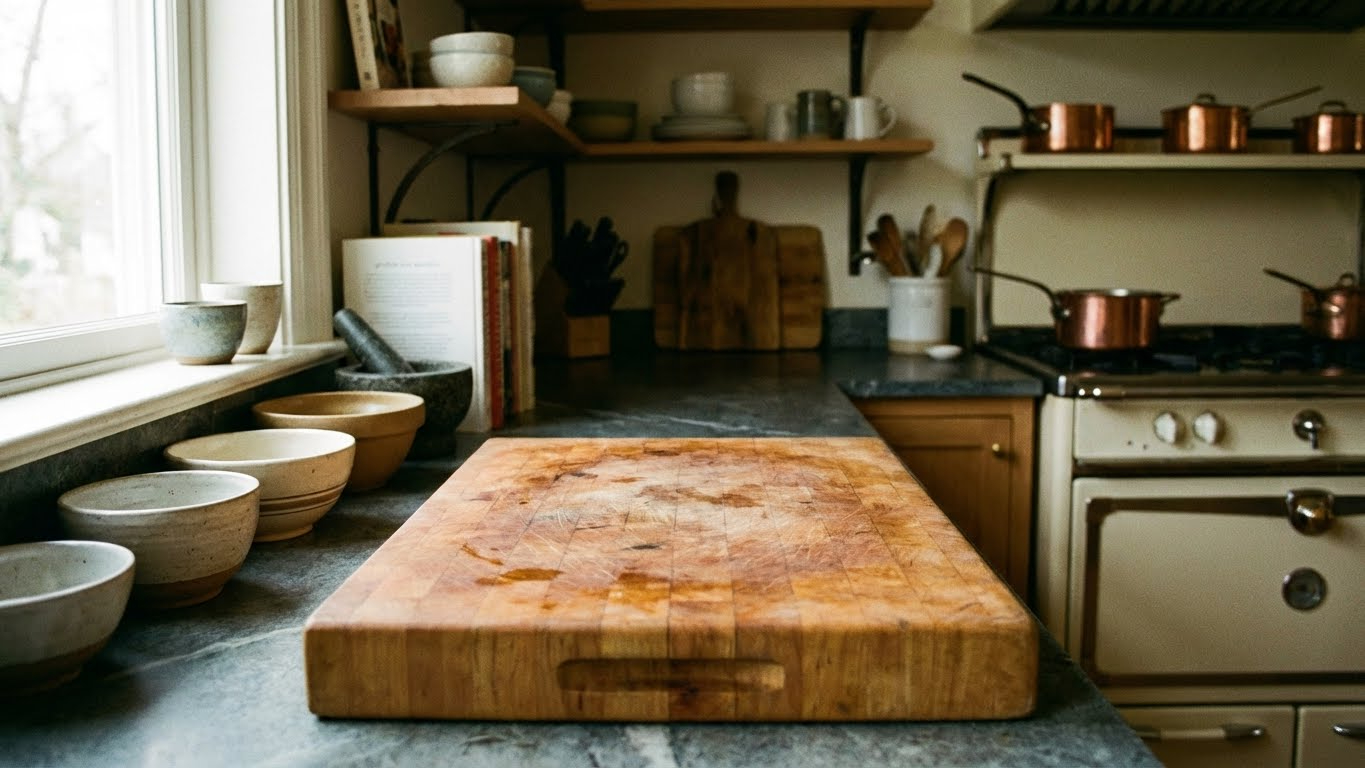
What We Look For
-
Knife edge protection
- Durability under repeated chopping
- Resistance to cracking or warping
- Ease of cleaning and maintenance
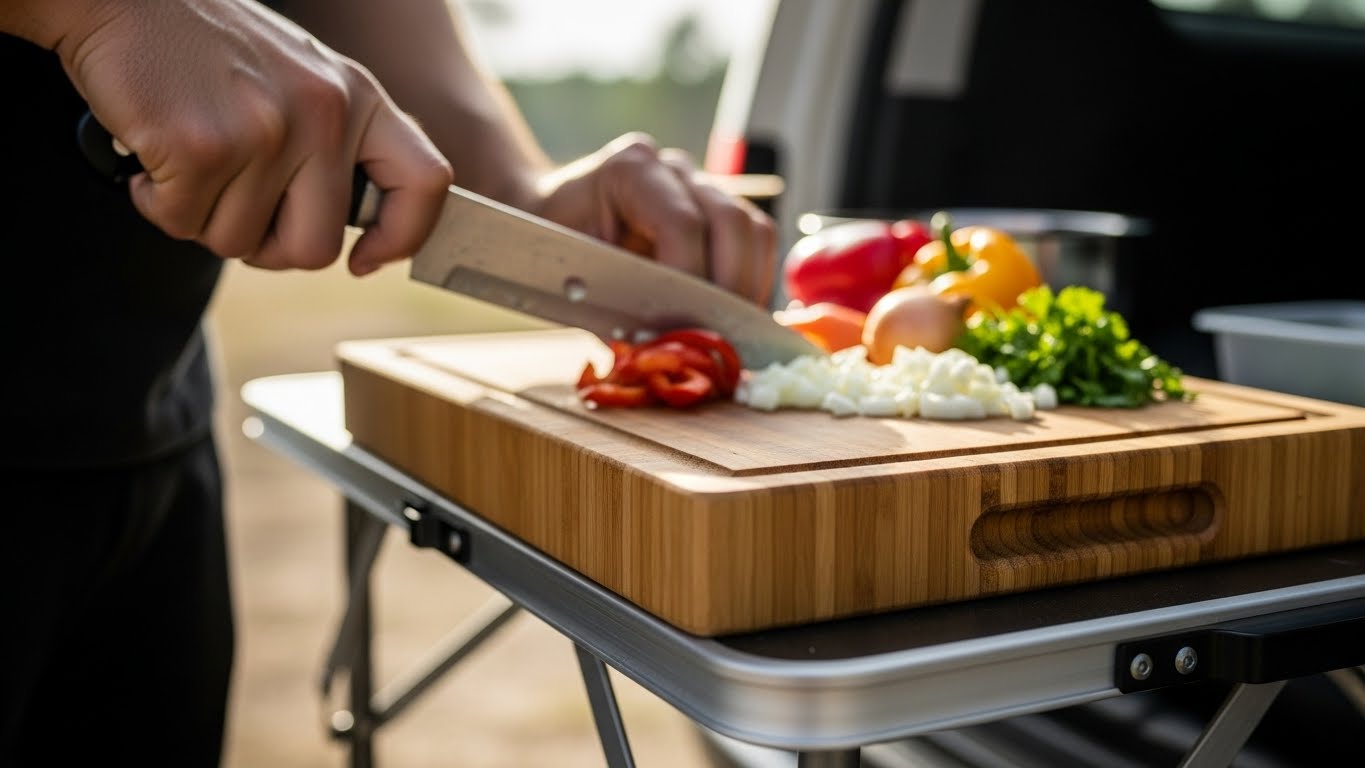
Real-World Conditions
-
Daily kitchen prep
- Heavy chopping sessions
- Repeated washing and drying
- Long-term wear testing
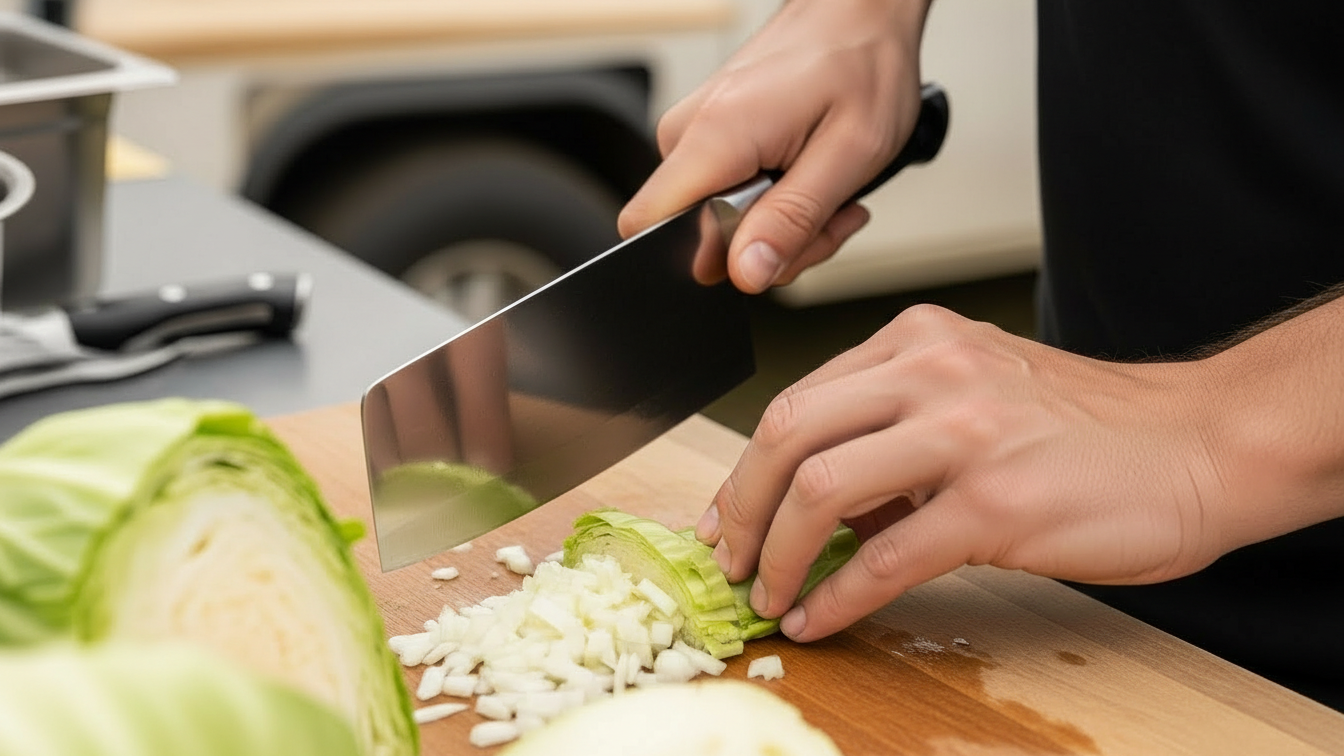
Size, Weight, and Stability
The wood itself affects weight, density, and stability. Denser woods often feel more stable during prep, while lighter woods can be easier to handle and clean.
Size Matters Too
Too small = unsafe /
Too large = impractical for travel
OTRE Recommendation:
Own one solid home board and one smaller travel-friendly board.
Wood Cutting Board Care
All wooden cutting boards need basic care to stay in good condition. Regular cleaning and occasional oiling prevent drying, cracking, and surface damage. See our mineral oil review.
Wooden Board Care
Wood boards need regular cleaning, complete drying, and occasional oiling to prevent drying, cracking, and surface wear.
✔ Wash with warm water and mild soap
✔ Dry immediately after cleaning
✔ Condition regularly with food-safe mineral oil
✔ Never soak or run through the dishwasher
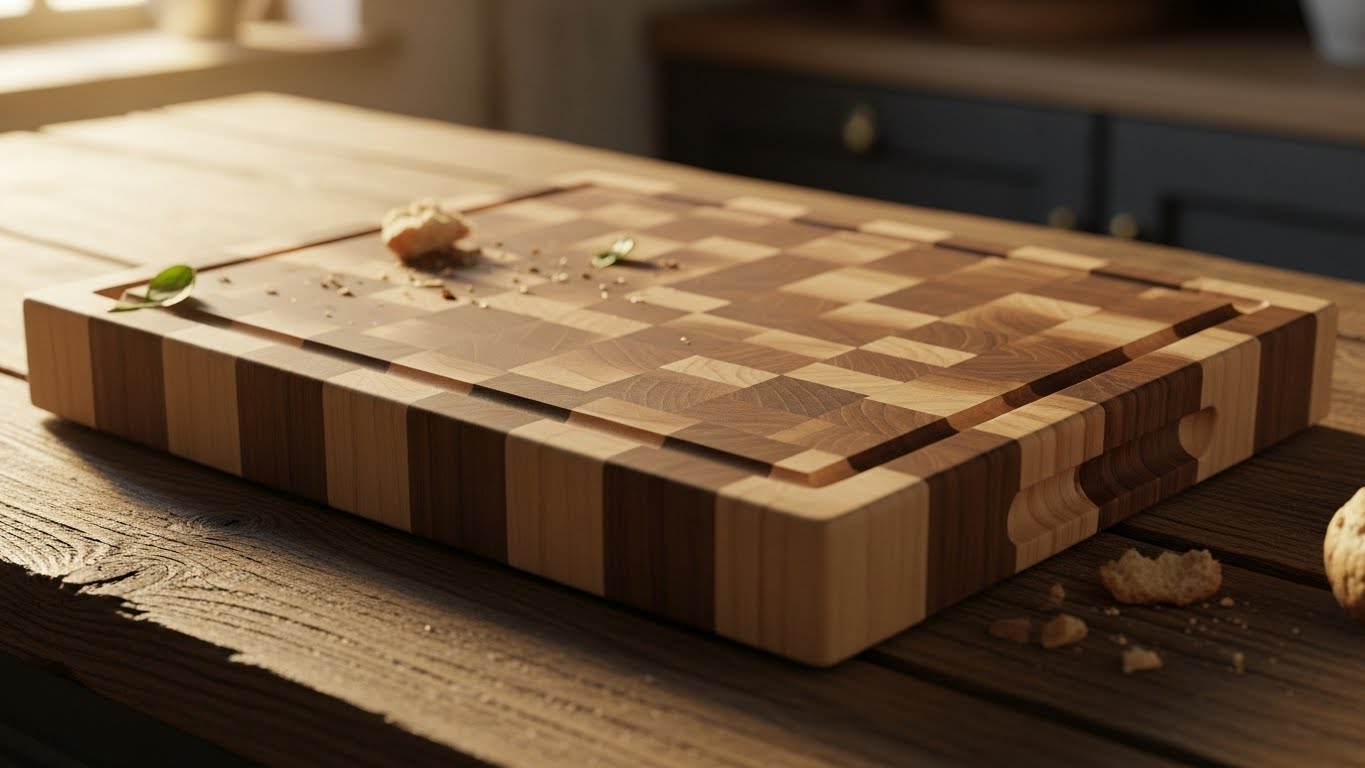
How to Clean & Oil a Wooden Cutting Board (Step-by-Step)
Wood cutting boards require regular maintenance to prevent drying, cracking, and bacteria buildup. In this step-by-step guide, we demonstrate how to properly wash, sanitize, dry, and oil a wooden cutting board using food-grade mineral oil. This process restores moisture, protects the wood fibers, and extends the life of your board.
Whether you’re using end-grain, edge-grain, maple, walnut, or acacia boards, proper cleaning and oiling makes a noticeable difference in performance and durability.
We use Thirteen Chefs Food Grade Mineral Oil for conditioning and restoring the board surface.
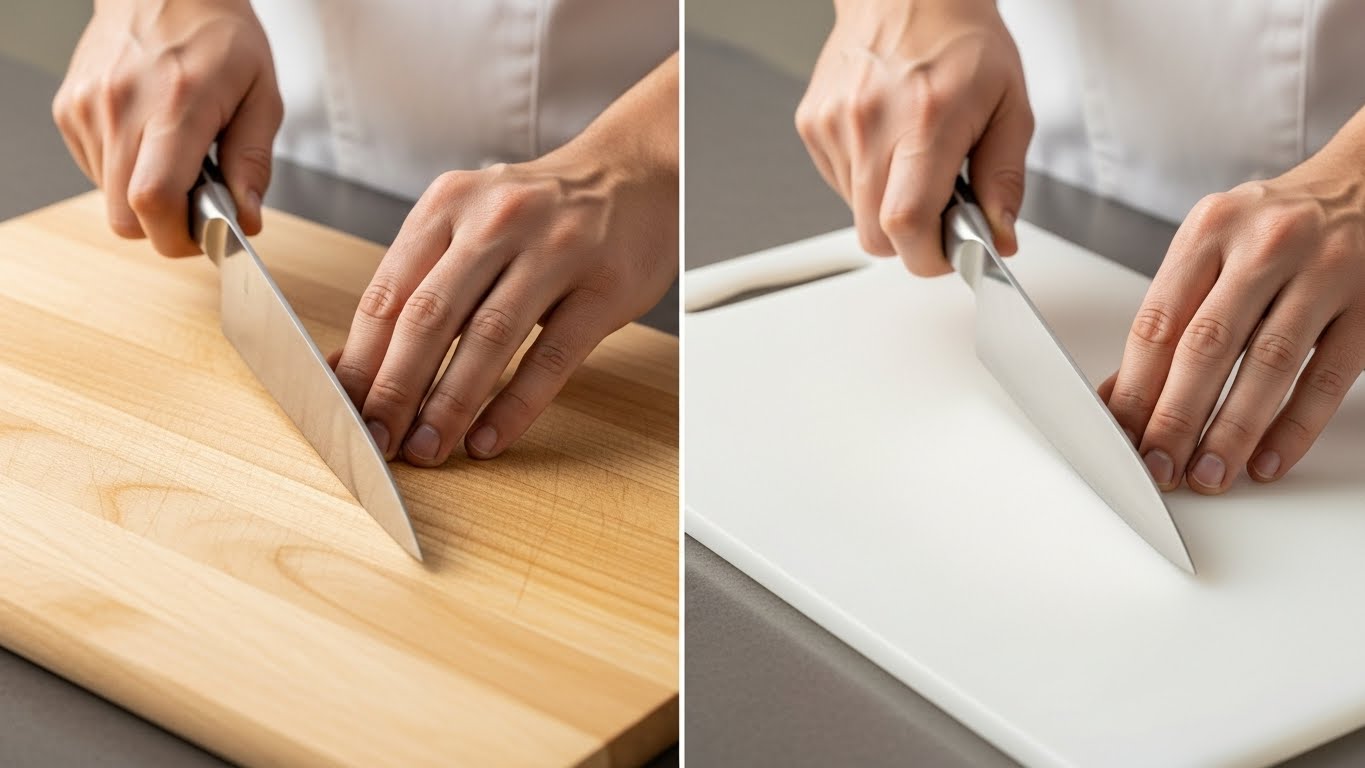
Plastic Board Care
Plastic boards are easier to sanitize, but they still need regular inspection because deep grooves can trap food residue and make cleaning harder over time.
✔ Wash thoroughly after every use
✔ Replace boards with deep scoring
✔ Sanitize when needed
✔ Avoid storing them wet
Common Cutting Board Mistakes
✔ Leaving boards wet after washing
✔ Using one board for everything without cleaning between tasks
✔ Ignoring deep grooves or cracking
✔ Skipping oiling on wood boards
✔ Storing boards where moisture gets trapped
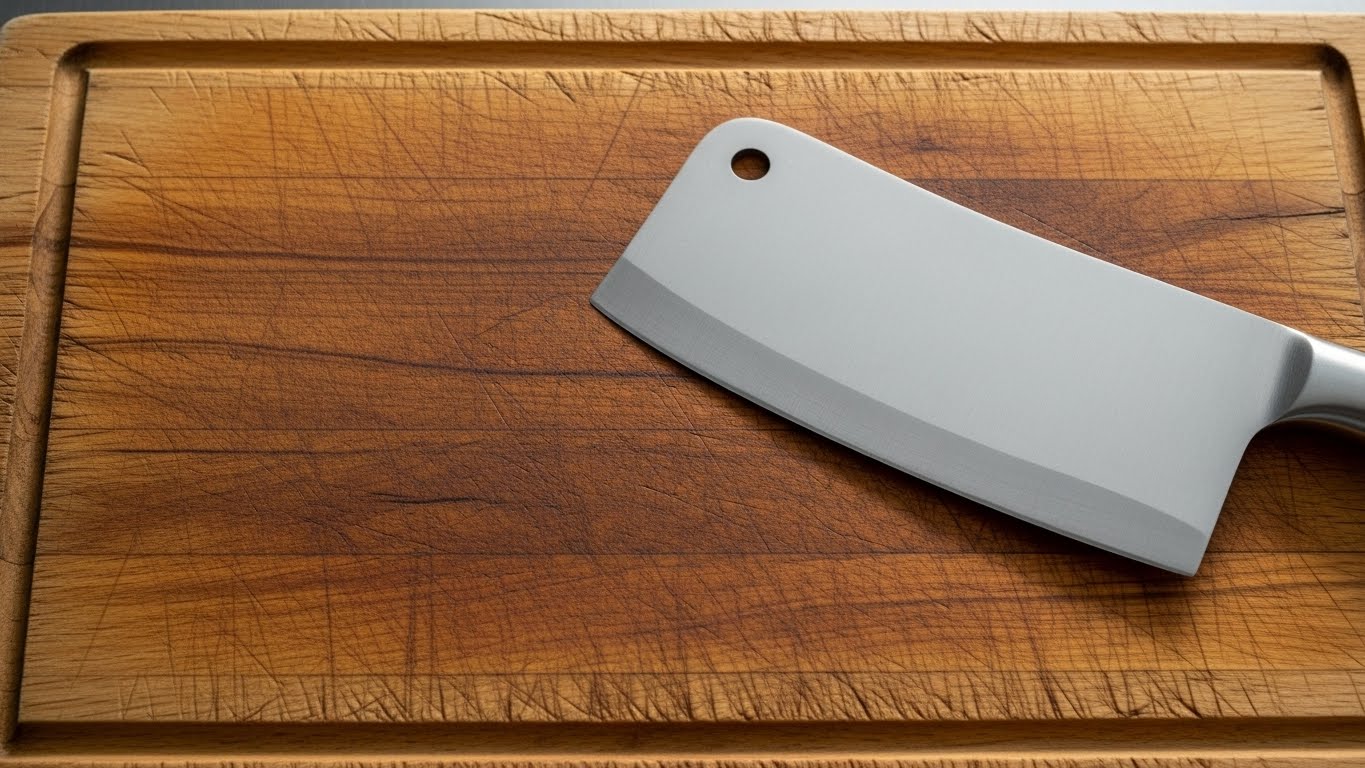
Most board problems come from neglect, not quality.
How Wood Choice Affects Knife Edges
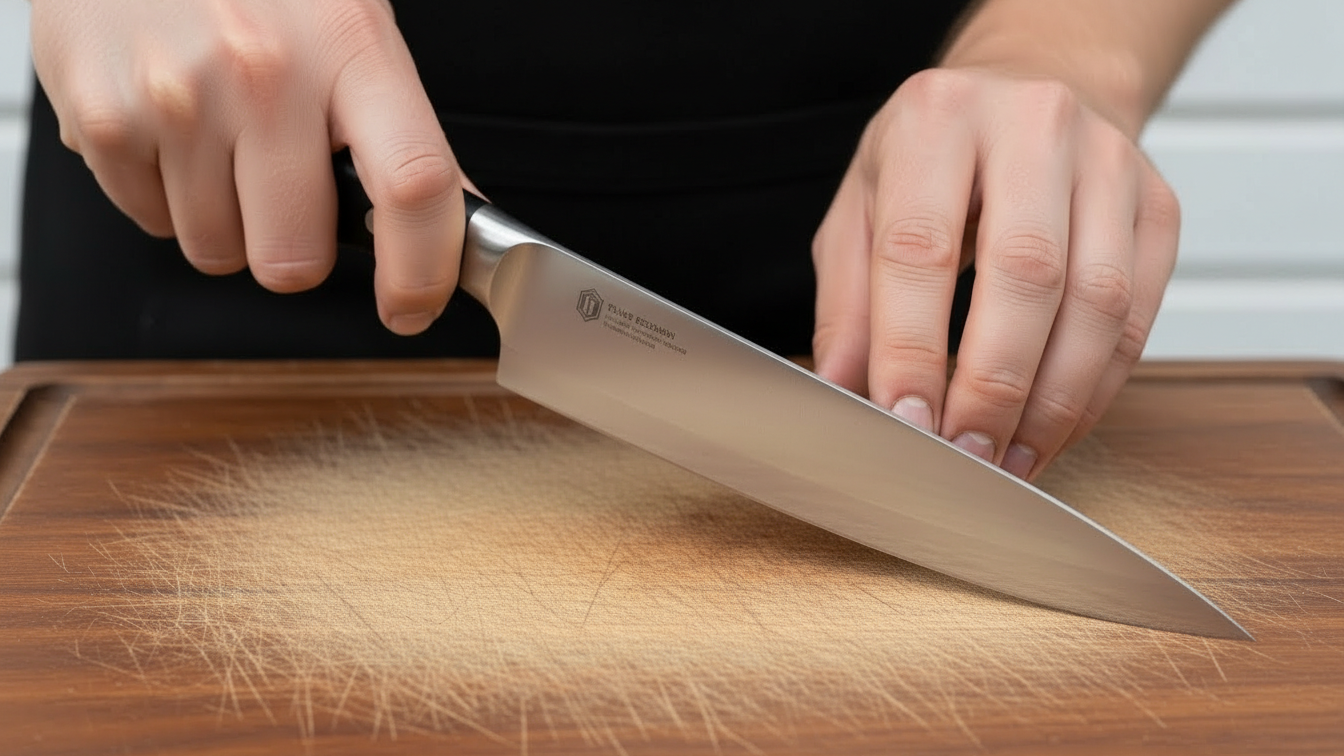
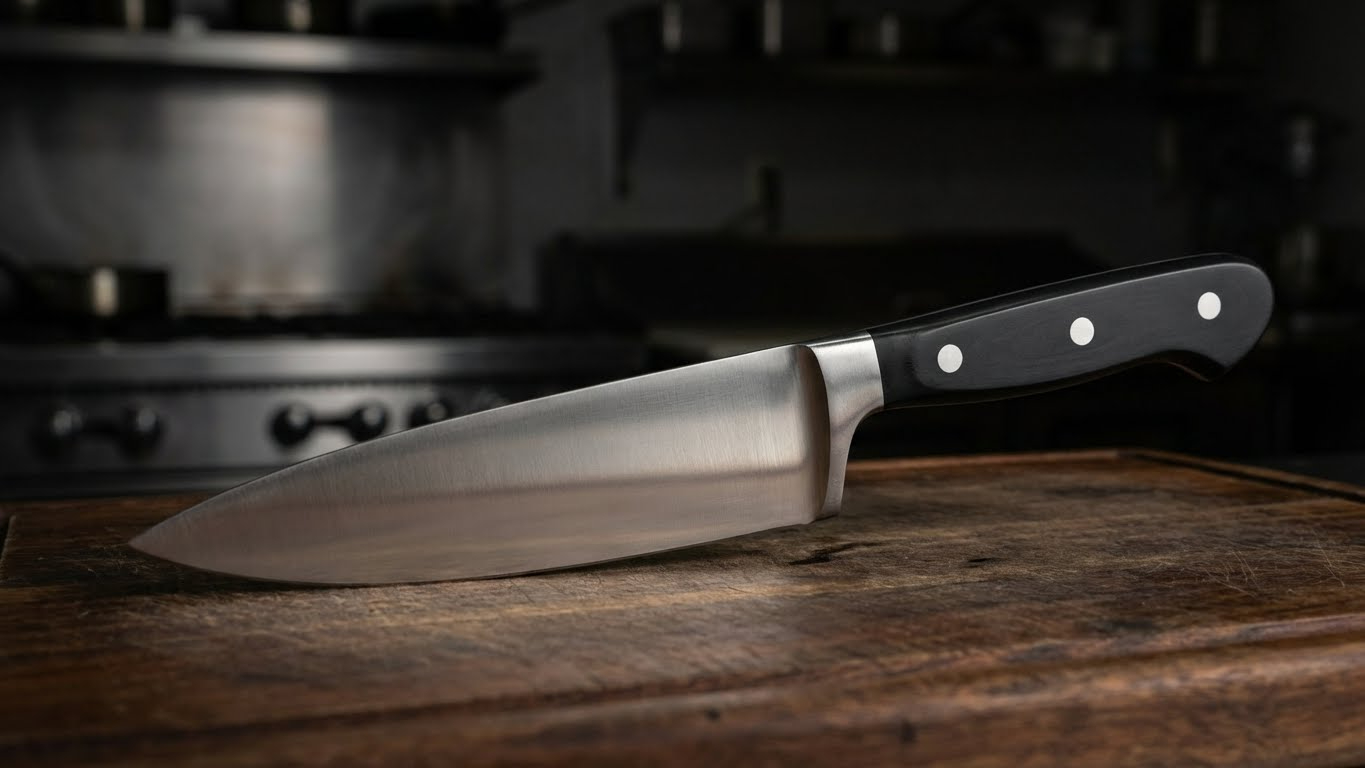
Some woods are gentler on knife edges than others. Extremely hard surfaces can dull knives faster, while well-balanced hardwoods provide enough give to protect edges during normal prep.
A good board:
✔ Extends time between sharpening
✔ Keeps edges aligned longer
✔ Makes honing more effective
A bad board:
✔ Dulls knives quickly
✔ Increases sharpening frequency
✔ Shortens blade lifespan
Bottom Line
For most home kitchens, maple remains the best wood for cutting boards because it balances durability, knife friendliness, and long-term stability. Walnut is a great choice for cooks who want a premium look, while teak offers excellent durability and moisture resistance.
If you’re choosing a full board rather than just the wood type, see our guide to the best cutting boards for home chefs.
Product Quality Index
Energy Generation