

What Is the Difference Between End Grain and Edge Grain?
When choosing a wooden cutting board, the biggest difference isn’t the species of wood — it’s how the wood is constructed.
End grain and edge grain refer to the direction the wood fibers face on the cutting surface. That construction changes how the board feels under your knife, how it wears over time, and how much maintenance it requires.
WHAT IS AN
End Grain Cutting Board?
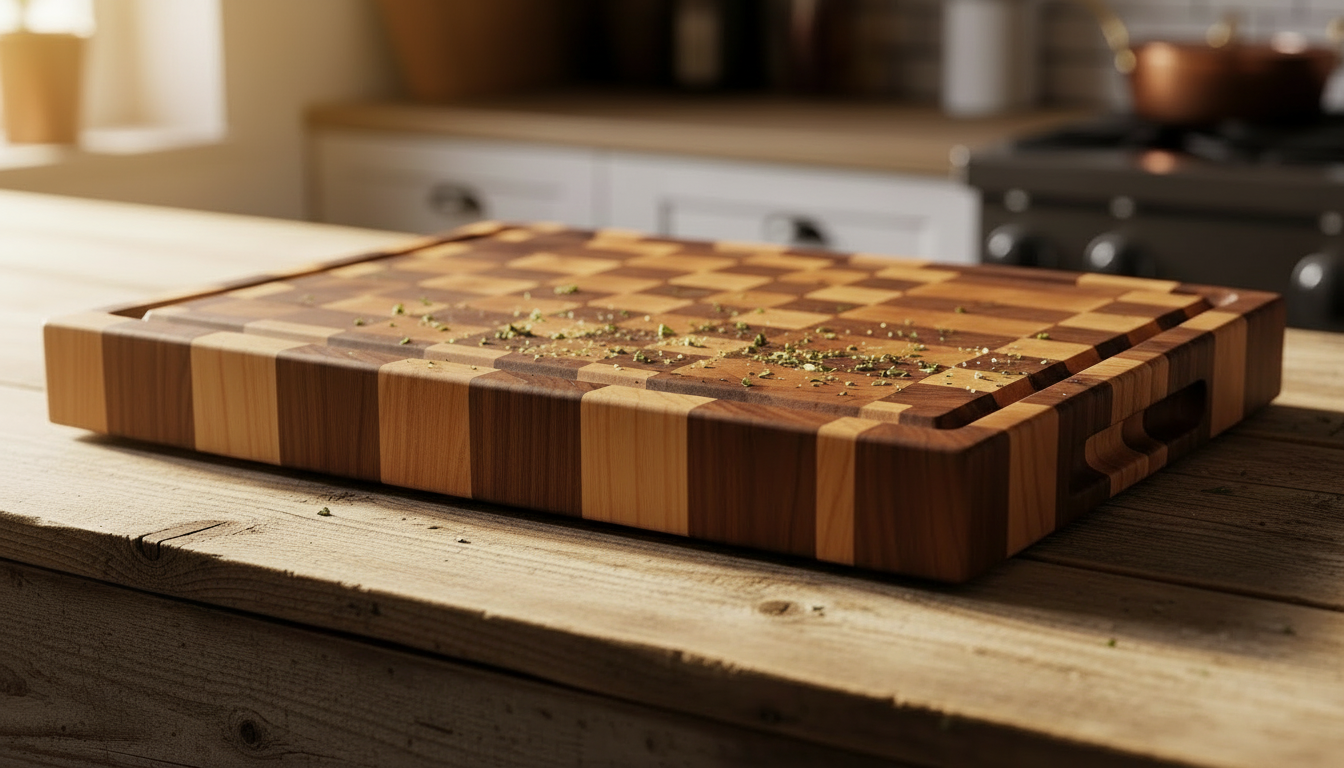
An end grain cutting board is built with the wood fibers facing upward — meaning you’re cutting into the ends of the wood fibers rather than slicing across them.
Because of this vertical fiber structure:
• The surface absorbs knife impact
• The fibers separate and then close back together
• The board appears “self-healing”
• Knife edges experience less stress
End grain boards are typically thicker, heavier, and more expensive due to the complex construction.
WHAT IS AN
Edge Grain Cutting Board?
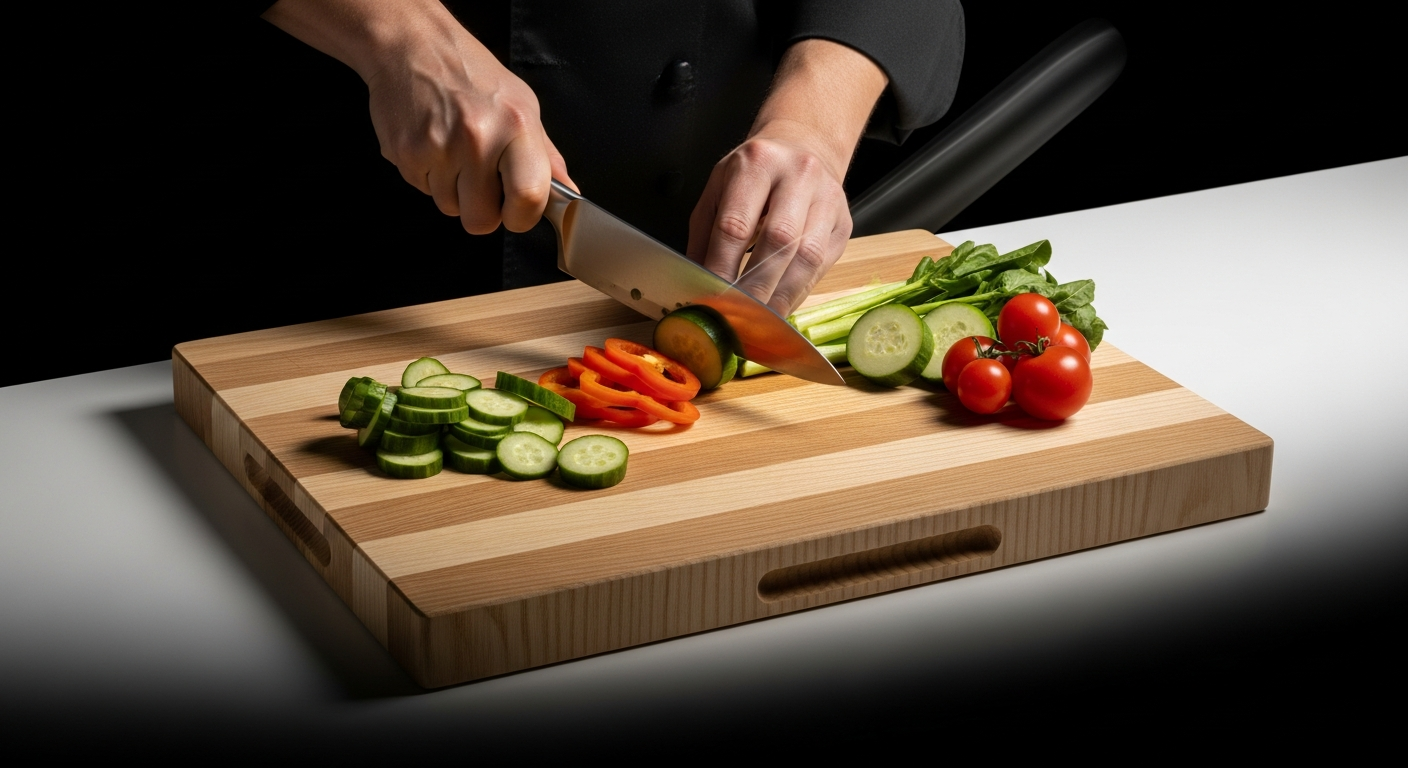
An edge grain cutting board is constructed by gluing long strips of wood side-by-side, with the grain running horizontally across the surface.
Because of this:
• The surface is slightly firmer under the knife
• The board is lighter in weight
• It’s easier to manufacture
• It usually costs less than end grain
Edge grain boards are extremely durable and still knife-friendly — just slightly less forgiving than end grain over long-term use.

Quick Verdict
If you want maximum knife edge protection and long-term durability, end grain wins.
If you want a lighter board that’s easier to move and typically more affordable, edge grain is the smarter everyday option.
Knife Friendliness
-
End Grain: ★★★★★
-
Edge Grain: ★★★★☆
Durability
-
End Grain: ★★★★★
-
Edge Grain: ★★★★☆
Maintenance Ease
-
End Grain: ★★★☆☆
-
Edge Grain: ★★★★☆
Weight
-
End Grain: Heavy
-
Edge Grain: Medium
Comparison Table — End Grain vs Edge Grain — At a Glance
This table highlights the key differences that actually matter in everyday kitchen use. Details and edge cases are covered below.
| Feature | End Grain | Edge Grain |
|---|---|---|
| Wood Fiber Direction | Vertical | Horizontal |
| Knife Edge Protection | Excellent | Very Good |
| Weight | Heavy | Medium |
| Cost | Higher | Moderate |
| Maintenance | Moderate | Easier |
| Visual Style | Checkerboard | Plank Pattern |
| Best For | Serious prep cooks | Everyday Kitchens |
How They Actually Perform in a Real Kitchen
Recommended Picks (Chef-Tested)
Recommended Knife & Comparisons
We have the best instructors
Cutting tools should feel natural, not forced. The knives featured here are chosen because they perform under real conditions, stay comfortable during long prep sessions, and hold up to repeated use. If a blade doesn’t earn trust over time, it doesn’t stay in rotation.