

Knife Storage & Travel

How to Protect Your Blades at Home and on the Road

Knife care doesn’t stop at sharpening. How you store and transport knives has just as much impact on edge life, safety, and longevity as how you sharpen them.

This guide breaks down the best ways to store knives at home, how to travel with them safely, and what mistakes quietly ruin blades over time — especially when cooking on the road.

Why Knife Storage Matters

Why Knife Storage Matters

Most knives don’t get damaged while cutting — they get damaged between uses.

✔ Poor storage leads to:

✔ Rolled or chipped edges

✔ Accidental dulling

✔ Unsafe handling

✔ Unnecessary sharpening

Good storage protects the edge you worked hard to maintain.

Looking for gear that performs as well as it travels? Check out our real-world tested Knife Reviews to see how these knives hold up in the kitchen and on the road.

Knife Storage Options That Actually Work

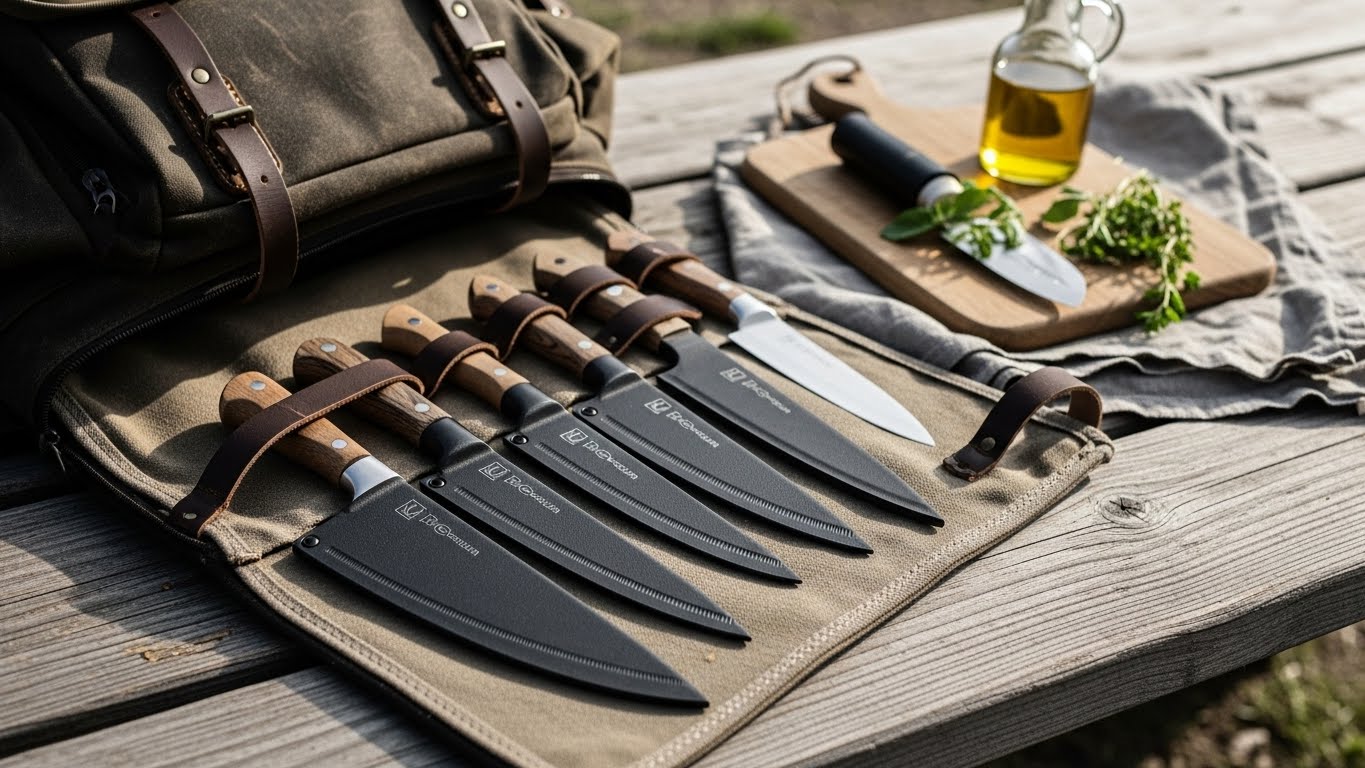
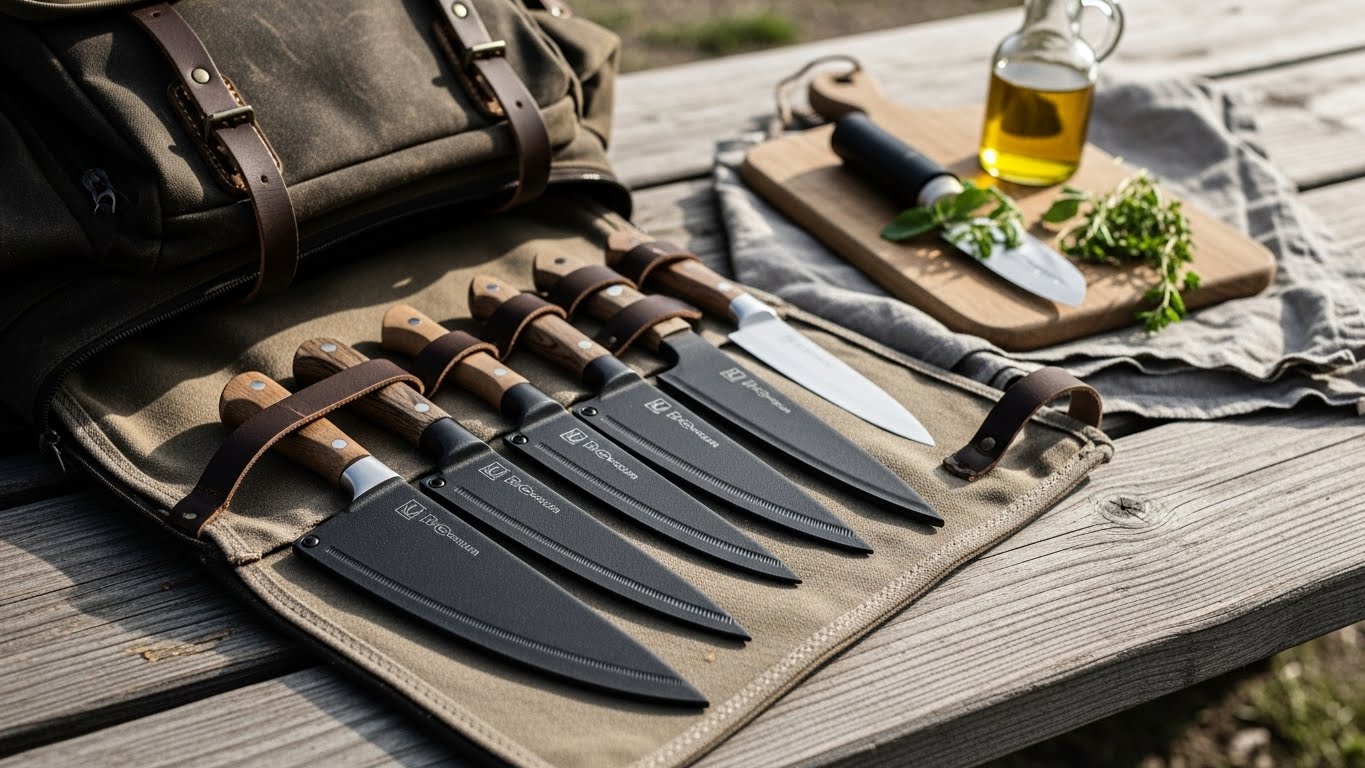
Knife Rolls — Best for Travel

Knife rolls are designed to protect blades while moving.

Why they work:

✔ Individual slots prevent blade contact

✔ Compact and portable

✔ Easy to pack and unpack

OTRE Take:
If you cook outside your home kitchen even occasionally, a knife roll is essential.

Blade Guards Edge Protectors —

Blade guards are lightweight sleeves that cover the edge.

Best uses:

✔ Drawer storage

✔ Travel bags

✔ Pairing with knife rolls

OTRE Take:
Blade guards are cheap insurance and should be on every working knife.

Drawer Inserts — Best for Home Kitchens

Drawer inserts keep knives organized and protected.

Benefits:

✔ No exposed blades

✔ Easy access

✔ Cleaner counters

OTRE Take:
This is the safest long-term home storage option if you don’t want knives on display.

Magnetic Strips — With Caution

Magnetic strips are popular but require care.

Pros:
✔ Saves counter space

✔ Easy visibility

Cons:
✔ Poor mounting risks drops

✔ Improper removal can damage edges

OTRE Take:
Use only strong, well-mounted strips and remove knives spine-first.

🔥 See All Real-World Knife Tests → Knife Reviews

Best Knife Storage for Travel & Road Kitchens

Travel changes everything.
Knife Storage & Travel Guide

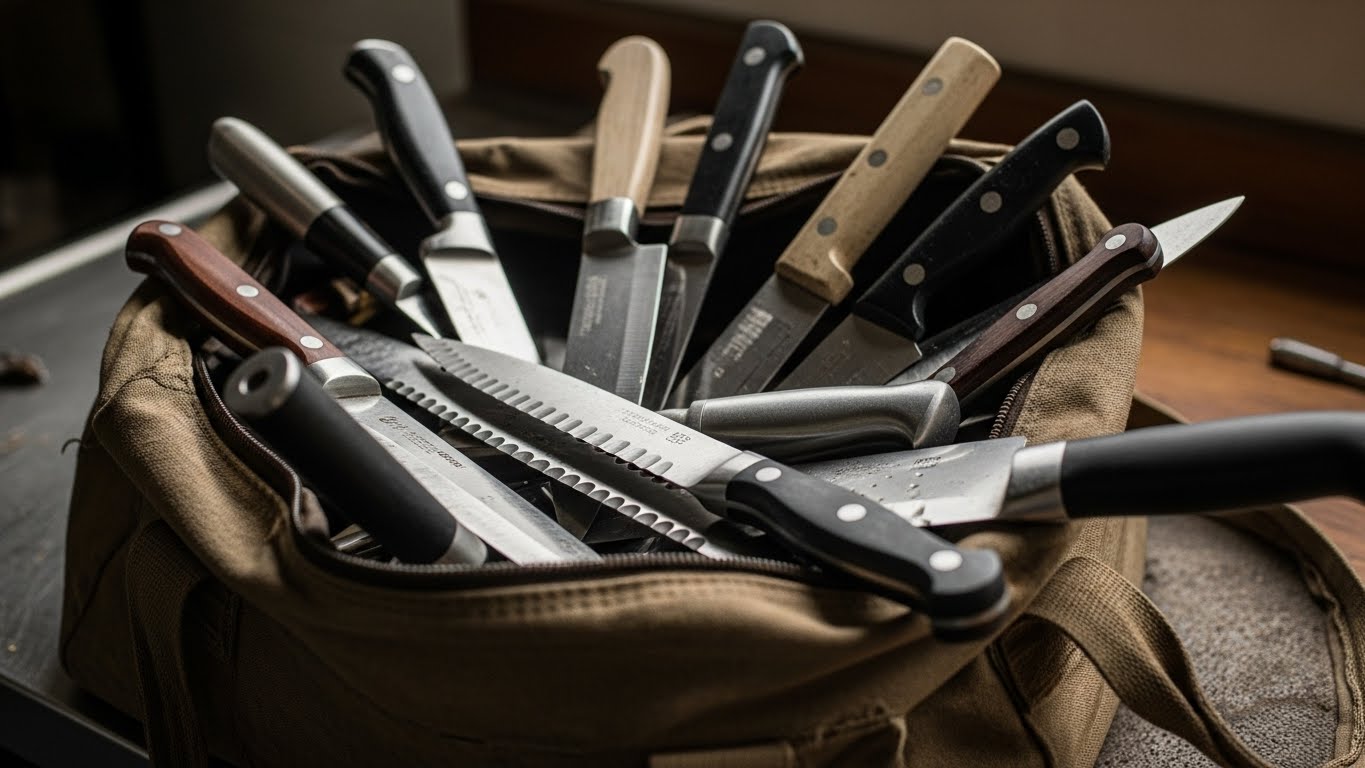
What to Avoid (This Ruins Knives Fast)

  • Tossing knives loose in drawers

  • Carrying knives unprotected in bags

  • Letting blades contact hard tools

  • Storing knives wet or dirty

Most knife damage comes from convenience, not use.
Knife Storage & Travel Guide

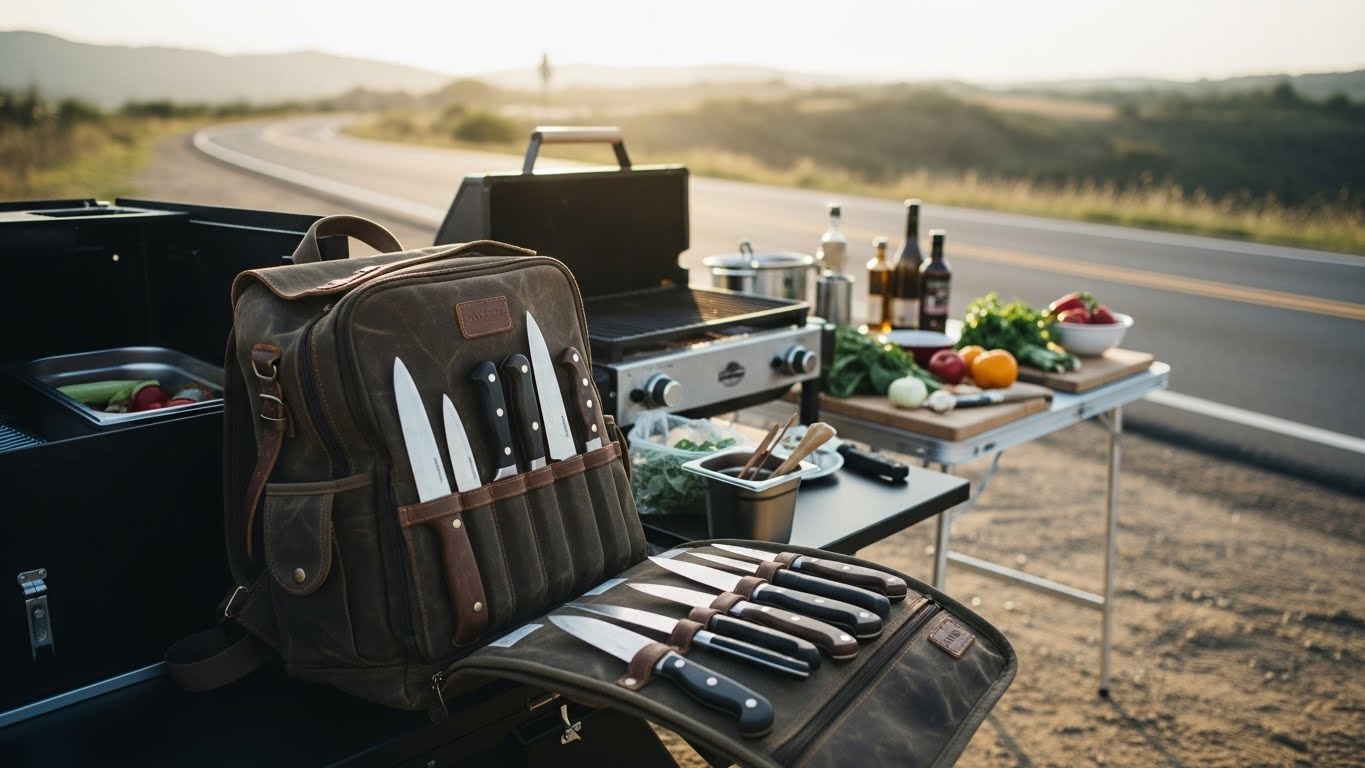
What Matters on the Road

  • Vibration

  • Limited space

  • Packing and unpacking

  • Shared gear bags

Knife Storage & Travel Guide

What Works Best

  • Knife roll + blade guards

  • Compact board-friendly knives

  • Dedicated knife-only storage

OTRE Rule:
If a knife can move inside the bag, it isn’t protected enough.

Once you’ve protected your blade, see how your knife performs in actual use — explore our Knife Reviews for performance comparisons on storage-ready knives.
How We Store Knives on the Road

Our real-world setup prioritizes:

✔ Edge protection

✔ Fast access

✔ Minimal space

We avoid bulky blocks, glass cases, and loose sleeves. Everything stays covered, secured, and easy to deploy.

Knife Storage & Travel Guide
knife sharpening on whetstone for edge maintenance

Storage vs Sharpening — The Hidden Connection

Bad storage dulls knives faster than bad sharpening.

Proper storage:

✔ Extends time between sharpening

✔ Keeps edges aligned

✔ Makes honing more effective

If you’re sharpening too often, storage is usually the problem.

Final Take

A sharp knife is an investment.

Storage is how you protect it.

Whether you cook at home or on the road, how you store knives determines how long they stay sharp, safe, and enjoyable to use.

Best Chef Knives for Real-World Cooking

Knives & Cutting Tools Tested on the Road

Knife Sharpening & Maintenance Guide

Cutting Boards for Knife Longevity

Traveling with knives? We test knives beyond storage — in kitchen prep, campfire cooking, and everyday use. Browse our Knife Reviews to see how these tools perform in action.

Knife Storage & Travel Guide — FAQ

What is the safest way to store knives at home?

The safest options are drawer inserts, blade guards, or a secure knife block. These prevent accidental contact with the blade and protect the edge from damage between uses.

Are knife rolls safe for everyday storage?

Knife rolls are excellent for travel and temporary storage, but they’re best paired with blade guards if used daily. For long-term home storage, drawer inserts or protected drawers are safer.

Can I store knives loose in a drawer if they have guards?

Even with blade guards, loose drawer storage isn’t ideal. Knives can still shift, collide with other tools, or wear down guards over time. Dedicated slots or inserts are safer.

Are magnetic knife strips bad for knives?

Magnetic strips aren’t bad if installed correctly, but poor mounting or improper removal can chip edges or cause drops. Always place and remove knives spine-first, not edge-first.

How should I travel with chef knives safely?

For travel, use a knife roll or hard case combined with blade guards. Knives should never be loose in a bag or backpack where movement can damage the edge or cause injury.

Can I travel with knives in a backpack?

Yes — but only if knives are fully protected. A backpack should contain a knife roll, blade guards, or a rigid case so blades can’t shift or press against other gear.

Is a tackle box a good option for knife storage?

A hard-shell tackle box can work well for travel if knives are stored with blade guards and dividers. The key is preventing movement and keeping edges fully covered.

Does knife storage affect how often I need to sharpen?

Yes. Poor storage dulls knives faster than cutting alone. Proper storage reduces edge damage and extends the time between sharpening sessions.

Should knives be stored dry?

  • Always. Knives should be completely dry before storage to prevent corrosion, staining, and handle damage—especially in enclosed rolls or cases.

What should I avoid when storing knives?

Avoid:

  • Loose drawer storage

  • Exposed blades in bags

  • Contact with hard tools

  • Damp storage environments

  • Cheap sleeves that don’t fully cover the edge

Most knife damage happens when knives aren’t being used.